Dec 30, 2025
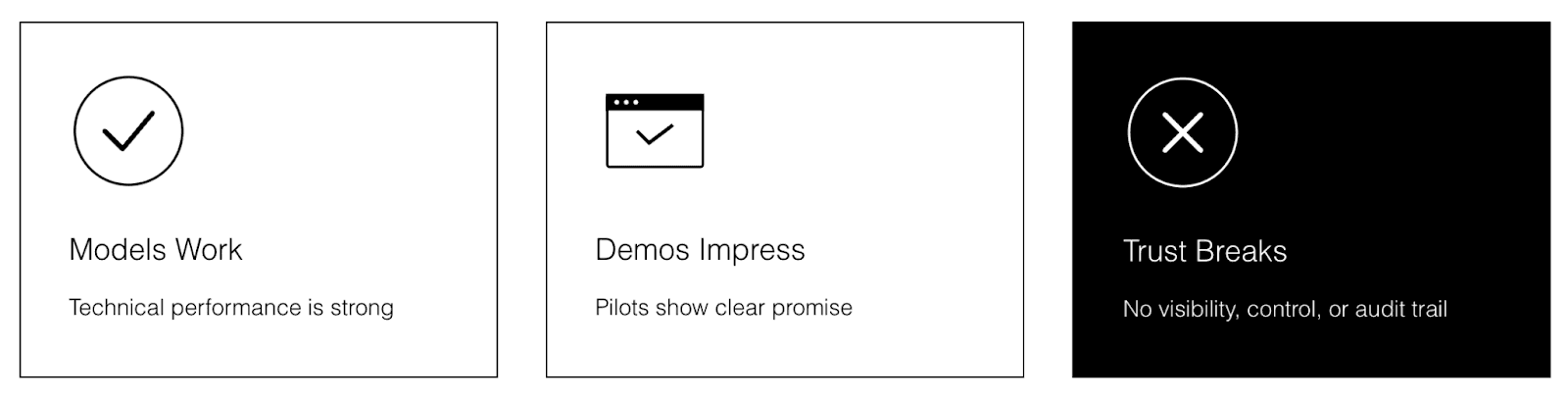
It’s 2026: enterprise AI is no longer experimental. AI agents are moving into real workflows: reading internal documents, querying databases, drafting reports, and supporting employees and customers at scale. The question most leadership teams are now asking isn’t whether to deploy AI, but how to do it without losing control.
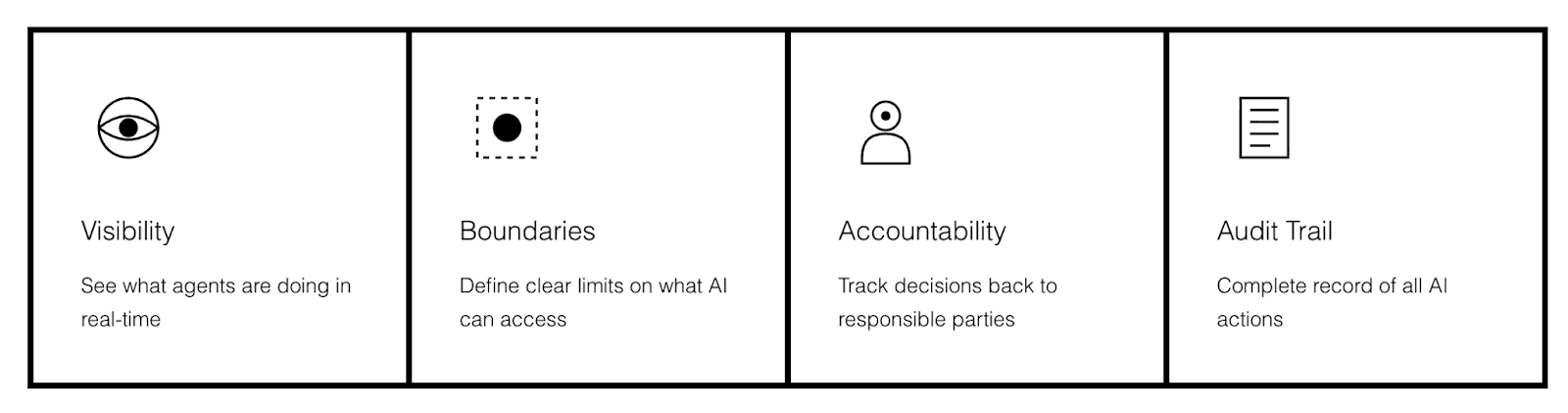
Clear ownership, intentional access controls, disciplined change management, and visibility into how systems behave in production are what turn pilots into durable systems.
Based on our experience deploying AI solutions in global enterprises, this 90-day rollout plan is designed to help enterprises move from intent to execution. It focuses on sequencing: starting small, matching controls to risk, and putting the right foundations in place before complexity compounds. The goal isn’t to slow teams down, but to create the conditions where AI can safely move into production and stay there.
A practical 90-day rollout plan for enterprise AI
Many enterprise AI efforts fail because they begin too broadly or feel restrictive from day one. A better approach is to start small, focus on a few real use cases, and match controls to risk.
Month 1: Set the foundations
Select two or three high-value use cases to focus on first
🔗 Learn More: Get 70+ free use cases for real AI agents, no code necessary.
Define clear roles, such as who can build, review, operate, and view agents
Enable single sign-on, multi-factor authentication, and role-based access from the start
Agree on what “production” means, and what level of review is required before a workflow reaches it
The goal in this phase is clarity. Everyone should know who owns what, and which workflows are still experimental.
Month 2: Tighten data access and change management
Create workspace boundaries by team or function
Define ownership rules for connectors and shared resources
Require version history and rollback for any workflow that touches sensitive data or systems
Introduce a publishing step so changes are reviewed before they go live
At this point, teams can still move quickly, but changes are no longer invisible.
Month 3: Make systems observable and operational
Define incident paths: how to pause an agent, roll back a change, or revoke access
Start a regular review cadence to look at usage, data sources, connectors, and failure cases
If leadership wants confidence that AI systems are under control, these are the questions that should have clear answers.
🔗 Learn More: See videos of AI agents that enterprises are actually putting into production.
Identity and access
Are all users authenticated through single sign-on with multi-factor authentication?
Are roles clearly defined for building, reviewing, operating, and viewing agents?
Are workspaces separated by team and risk level?
Data and tools
Are connectors limited to the minimum access required and clearly owned?
Are knowledge sources restricted to approved groups?
Can the agent take actions in systems, or is it limited to suggestions and is that choice intentional?
Change management
Is there version history and a clear rollback path for workflows?
Is there a review step before anything reaches end users?
Visibility and accountability
Can you answer who ran an agent, when it ran, and what data it accessed?
Are multi-step workflows traceable end to end?
Is there a clear way to pause an agent or revoke access if something goes wrong?
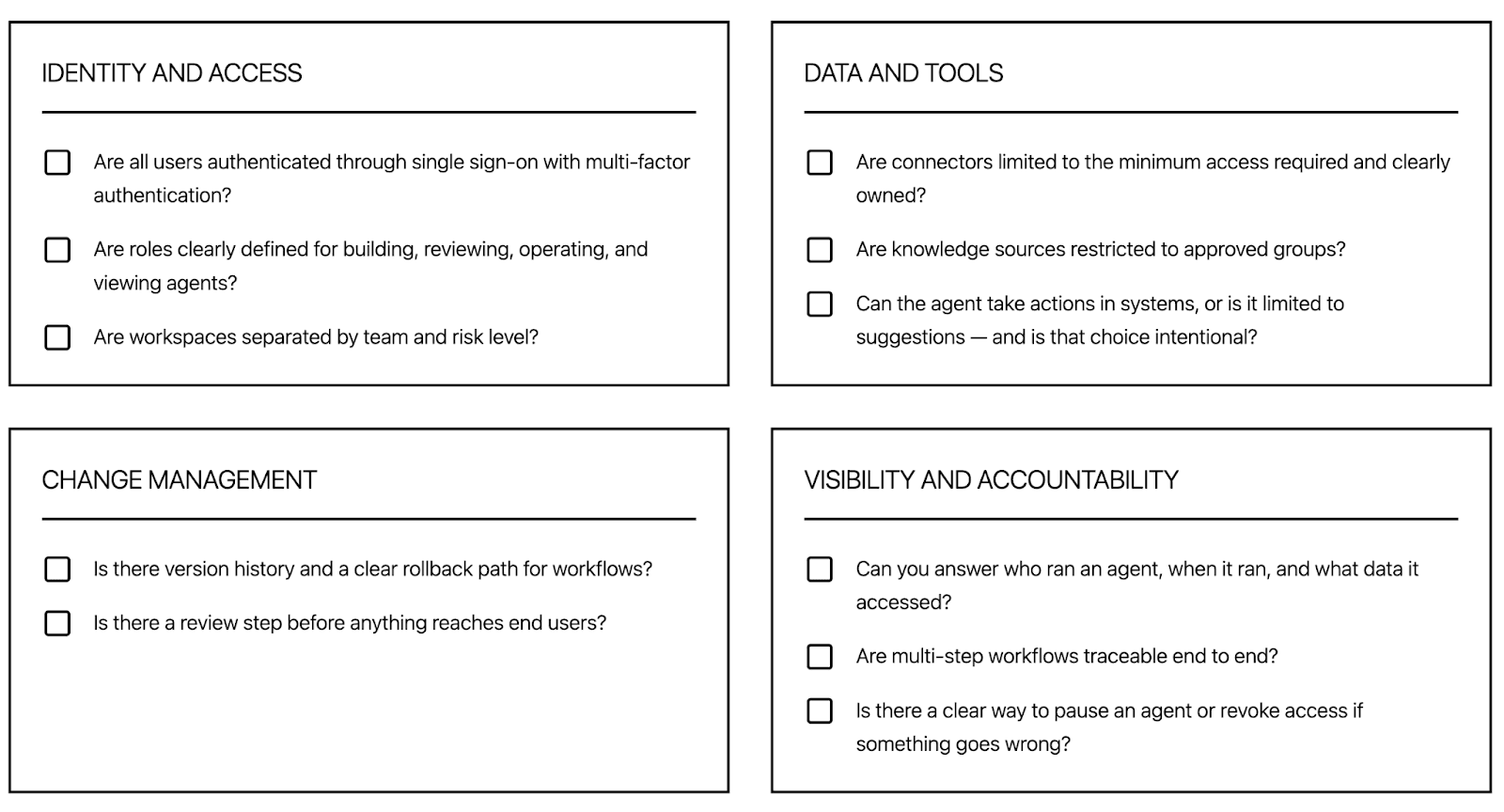
If these questions are hard to answer, scaling AI will quickly run into resistance. Clear answers don’t just reduce risk, but also make it easier for teams to move forward with confidence.
Conclusion: From readiness to momentum
This rollout plan and readiness checklist show that when identity, data access, change management, and observability are clearly defined, teams move faster, not slower. Reviews become predictable. Risk becomes manageable. And AI systems become something the organization is willing to rely on.
As enterprises move into 2026, the winners won’t be the ones with the most pilots—they’ll be the ones that can consistently move AI into production, scale it across teams, and keep it running with confidence.
🔗 Want to start transforming your enterprise with AI in 2026? Get a demo here.

Ana Rojo-Echeburúa
Growth at StackAI
Mathematician turned AI consultant and educator. Passionate about helping businesses and individuals use data, cloud, and AI to solve real-world problems.